The CAN transceiver boards on the pan tracker were hanging off loose jumpers, and the bus between the Nucleo and the Jetson was hand-twisted wire. Due to my deep-seated fear of bumping my boards to the point of destruction: I decided to print an enclosure for the motor driver on my new Bambu A1. It went well, so the CAN boards were next.
A USB-C cable already has a twisted pair (D+ and D−) and a ground, so I put a USB-C port on the end of the enclosure, and now any USB-C cable is a CAN cable!
Background
- CAN
- A bus where every node shares two lines, CAN-H and CAN-L. Each bit is the voltage difference between them, so noise that hits both wires equally cancels out. It’s all over cars and robots.
- Transceiver
- The chip between the microcontroller’s CAN controller (TX and RX logic pins) and the bus wires. The SN65HVD230 is a 3.3 V part, and the Waveshare board has a 120 Ω terminator on it.
- Twisted pair
- Two wires twisted around each other so they pick up the same noise.
- D+ / D−
- The USB 2.0 data pair, which runs as a twisted pair inside a USB-C cable.
- Heat-set insert
- A brass threaded insert pressed into a printed hole with a hot soldering iron, so the screw bites metal instead of plastic.
- TEC / REC
- Each CAN controller’s transmit and receive error counters. 0 means it hasn’t seen any errors. A node with low counts is “error active”, the normal state.
The enclosure
My second Fusion design, after the VNH5019 enclosure.
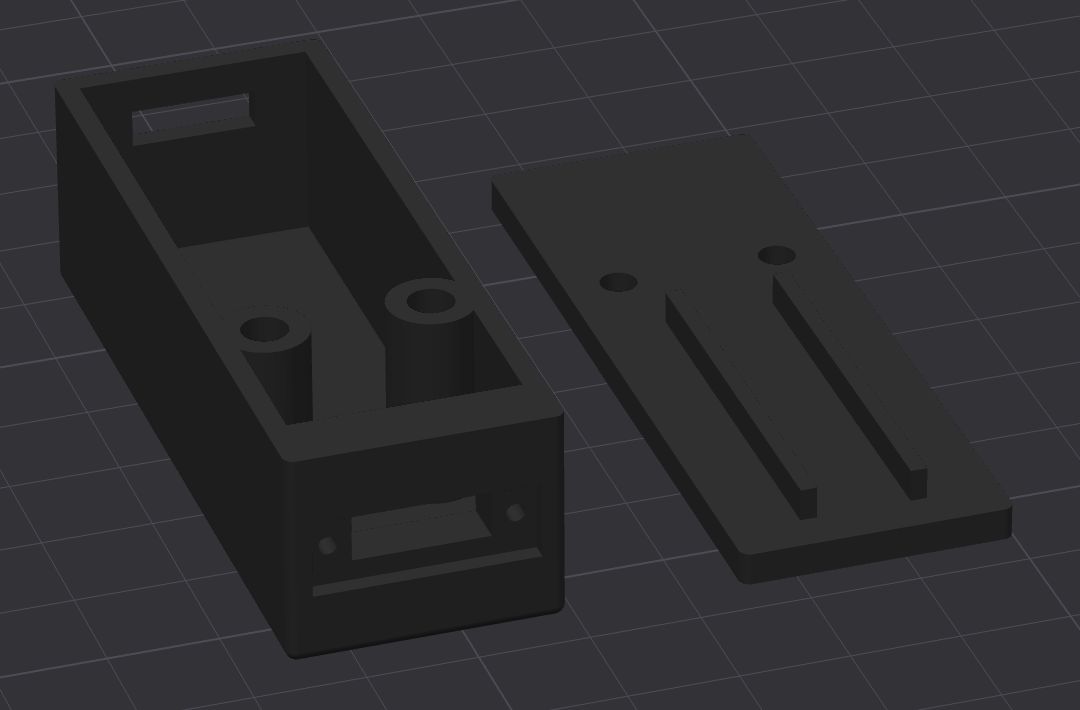
- Fits a Waveshare SN65HVD230 board and a 16-pin USB-C panel-mount breakout (20 × 6.6 mm metal faceplate, with V / D− / D+ / G pads).
- The faceplate sits flush in a recess on one end, held with two M2 screws.
- A slot on the other end for the board’s 4-pin header (3V3, GND, RX, TX), so the Dupont jumpers plug in from outside the box.
- Stepped rails on the base plate locate the board and keep the solder joints underneath off the base.
- The base plate screws on with two M3 screws into heat-set inserts.
- “CAN” is embossed on top. I was quite pleased with the lettering, my first time trying that in CAD!
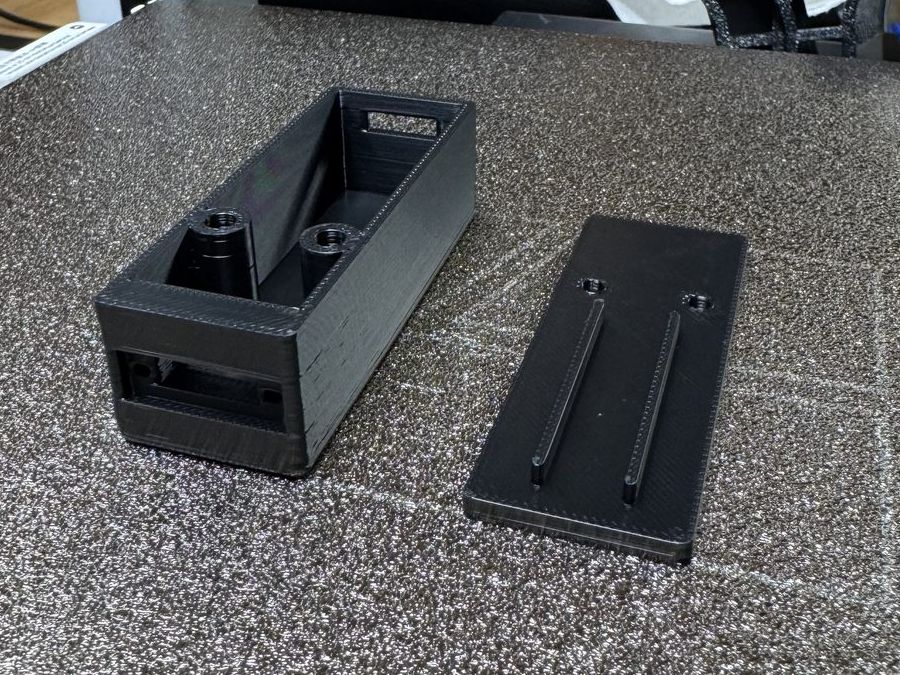
- The shell prints upside down (top face on the plate) and the base prints flat, no supports. PETG, 48 minutes, 18 g.
Wiring
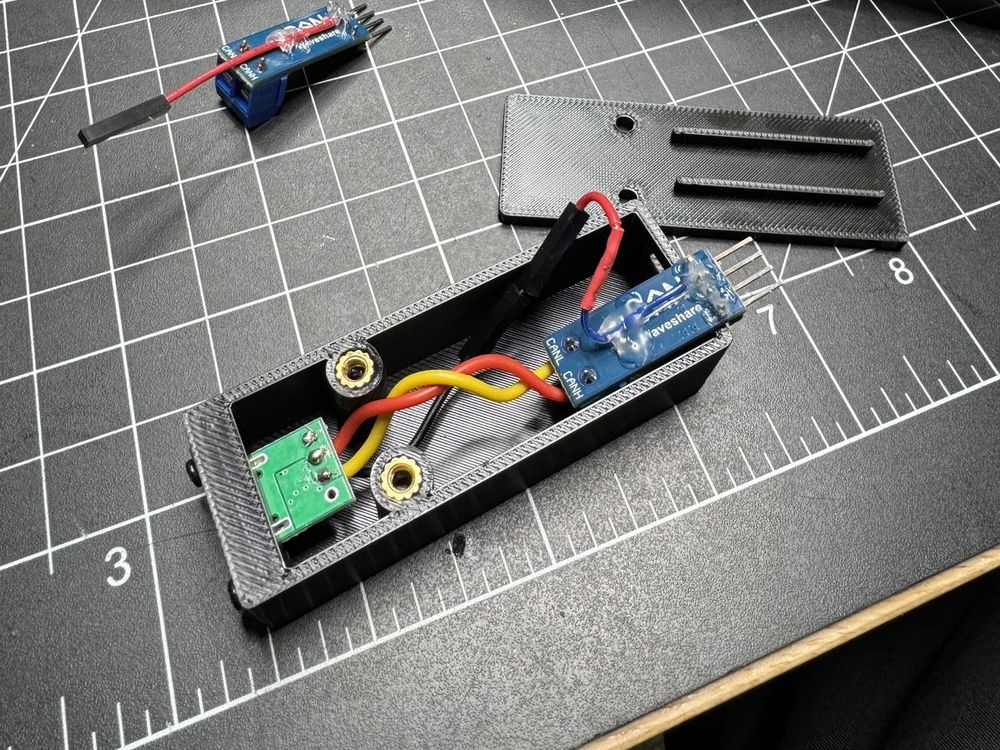
- CANH → D+
- CANL → D−
- GND → G
- V (VBUS) left unconnected
I also wanted a shared ground between the STM32 and the Jetson, so that’s a bonus on top of cleaning up the wire clutter.
D+ and D− are a twisted pair in the cable, which is exactly what CANH and CANL want. I also twisted the wires inside the box. The breakout connects both rows of the USB-C receptacle, so the plug works either way up. I checked continuity end to end with the plug both ways to be sure, and the mapping was the same.
Testing
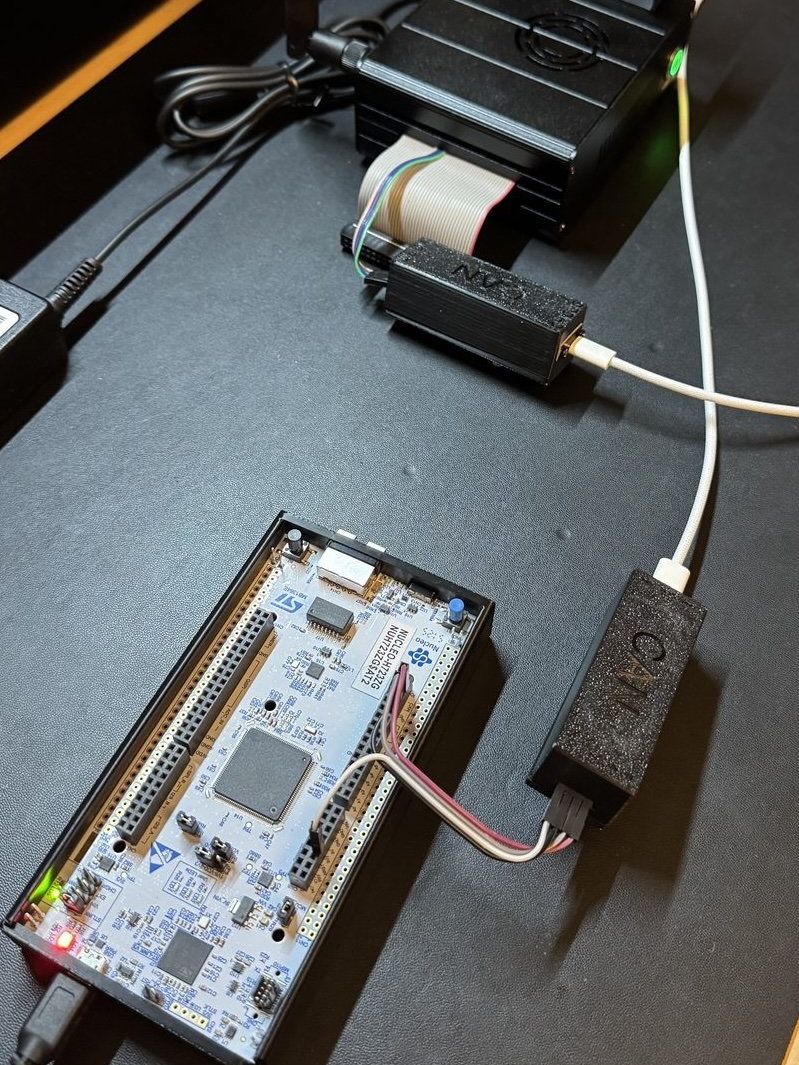
- Classic CAN at 1 Mbps, with one enclosure at each end of the bus (Nucleo and Jetson) and less than 1 m of cable.
can test 10000on the Nucleo sends 10,000 frames, andcan_echo.pyon the Jetson sends each one back.- 10,000/10,000 round trips, 0 gaps, 0 bad data!!! Love to see it.
- Nucleo TEC/REC stayed at 0. The Jetson stayed error active with 0 bus errors.
It’s not USB
It looks exactly like a USB port, but it carries CAN. I’ll be careful to never put either end into my Mac!